Worksheets › Alphabet Worksheets
Free Letter E Tracing Worksheet (Printable PDF)
Download a free printable letter E tracing worksheet for children aged 3–6. Practise uppercase E and lowercase e with guided tracing rows, then write from memory. E is for Elephant. No sign-up, no watermark. Print and go.
↑ Click to download
What is on this worksheet
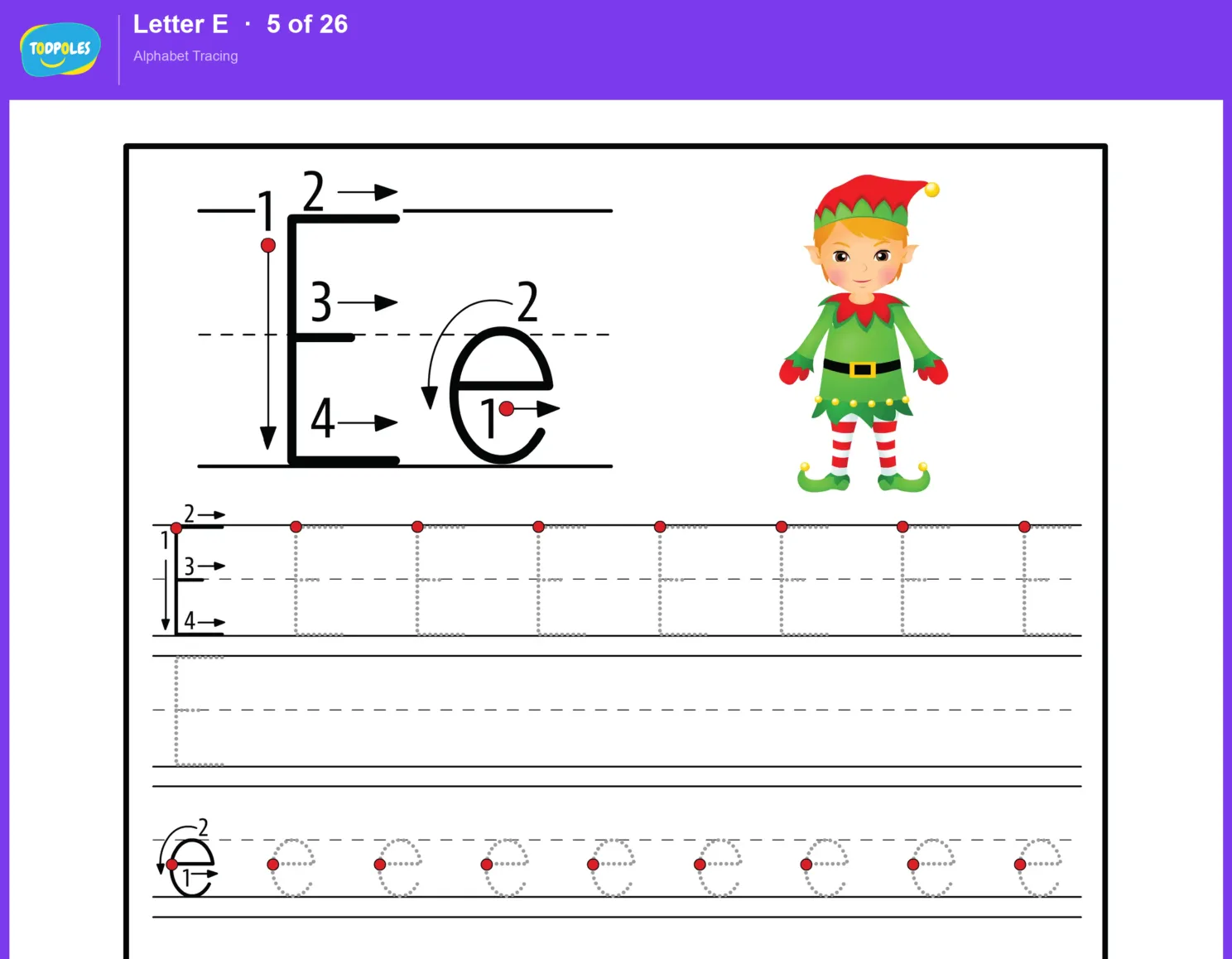
Uppercase E
A solid model letter followed by four faint copies to trace. Children see the correct letterform then practise it immediately in the same row.
Lowercase e
Same trace-and-repeat format for the lowercase. Both cases on one sheet so children learn the pair together — as they appear in real words and books.
Free-write lines
Open lines at the bottom for writing from memory — where tracing becomes real writing and the letter sticks in long-term muscle memory.
About the letter E — sound, shape, and words
Letter E makes two main sounds: the short /ɛ/ sound as in elephant, egg, and end — and the long /iː/ sound as in eat and equal. E is the most common letter in English text, so building a solid E is especially important for early readers.
How to form the letter E
Uppercase E: draw a straight vertical line from top to bottom, then add three horizontal lines to the right — one at the top, one in the middle, and one at the bottom. The middle line is slightly shorter. Lowercase e: start in the middle, draw a horizontal line to the right, then curve up, around, and down into an open curve — like a backwards C with a crossbar.
Words that start with E
Use these words while tracing to connect the letter shape to a sound: Elephant, Egg, Ear, Elbow, Engine, Eagle, Empty. Say E — Elephant while tracing. The short /ɛ/ sound at the start of elephant is the most common E sound in beginner words.
The Todpoles Letter E flash card
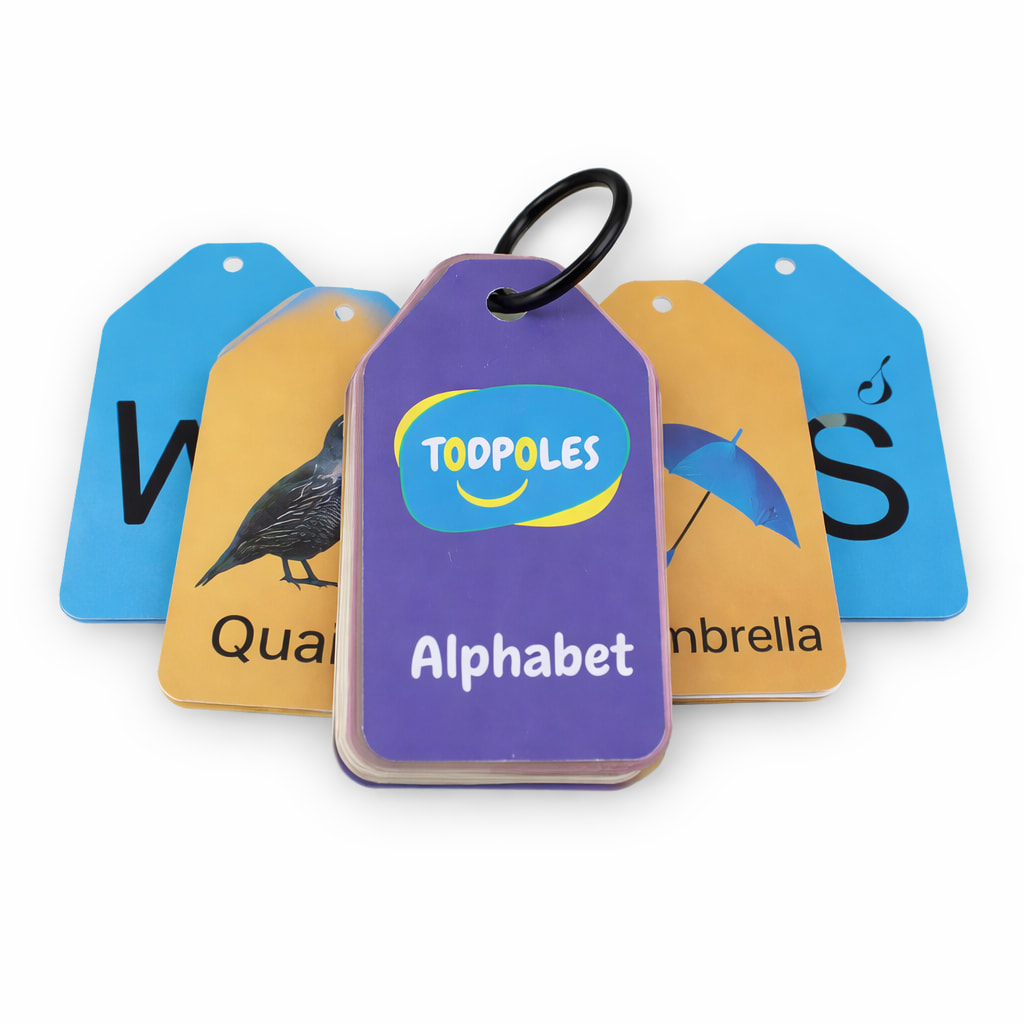
The Todpoles Alphabet flash card for Letter E pairs Ee with a Elephant illustration — the same word-letter connection used on this worksheet. When children see the card, trace the letter, and hear the word together, they form a much stronger memory than any single activity alone.
In the Todpoles app, scanning the Letter E card unlocks interactive letter games — children hear the letter sound, see the letter animate, and match it in a game. The card and worksheet work together: paper builds the motor skill, the app reinforces the sound.
How to use this worksheet
Ages 3–4
Do one tracing row per sitting — uppercase first, lowercase in a later session. Trace slowly, saying “E — Elephant” aloud with each stroke. Do not rush to the free-write lines; tracing builds the motor memory that makes free writing possible. Three to five sessions spread over a week is ideal for this age group.
Ages 5–6
Complete the full sheet — uppercase, lowercase, and the free-write lines — in one sitting. Aim for consistent size and letters sitting on the baseline. Once free-writing feels confident, try writing the letter without looking at the model at all.
Common mistake to avoid
Many parents skip straight to the free-write section. This feels faster but skips the motor-learning phase — children end up with shaky, inconsistent letterforms. Let the tracing rows do their job first. The free-write section is the reward, not the shortcut.
Frequently asked questions
What age is this worksheet for?
Ages 3–6. Children aged 3–4 typically work one row at a time over several sessions. Children aged 5–6 can complete the full sheet — uppercase, lowercase, and free-write — in one sitting.
What does the letter E sound like?
Letter E makes a short /ɛ/ sound as in egg and elephant, and a long /iː/ sound as in eat. E is the most common letter in English — strong E recognition is a big early reading milestone.
Is this worksheet free to download?
Yes — completely free. Click the download button and the PDF opens directly. No email, no account, no watermark. Print as many copies as you need.
Can I print more than one copy?
Yes. We recommend printing 2–3 copies and using a pencil so your child can erase and repeat. Most children need 3–5 practice sessions before writing a letter confidently from memory.
What comes after Letter E?
Move on to Letter F once your child can write E from memory with consistent size and shape. You can also browse all 26 letters and download the full A–Z bundle.
Todpoles — Learn with Flash Cards
Make letter E come alive in the app
Todpoles is a phygital learning app for children aged 2–7. Pair the physical Alphabet flash card set with the free app — scan the Letter E card and watch it unlock interactive letter games, sounds, and stories.
- Scan the Letter E card to hear the letter sound
- Play letter matching and tracing games in the app
- Cards cover all 26 letters — English and Hindi
- No ads, no pressure, no timers — joy-first learning